
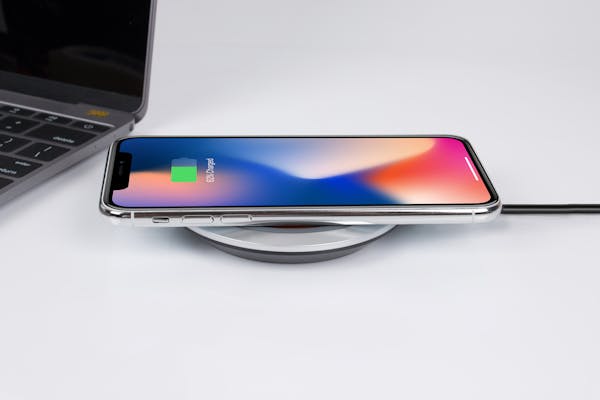
Have you ever placed your phone on a wireless charging pad and thought, “Wait… how is this thing charging without a cable?” At first glance, it does feel like magic. No wires, no plugs — just power flowing through thin air.
But in reality? It’s not magic. It’s physics — and it’s actually been around longer than you think.
The Science Behind the Scene: Electromagnetic Induction
Wireless charging is built on a principle called electromagnetic induction. Sounds fancy, but the idea is simple:
When an electric current flows through a coil of wire, it creates a magnetic field. If you place another coil nearby, that magnetic field can induce (or generate) a current in the second coil — without them touching.
This idea was first demonstrated by Nikola Tesla over 100 years ago. Yes, the same Tesla the car is named after.
So What’s Actually Happening Inside a Wireless Charger?
Here’s a simple breakdown:
1. Inside the Charging Pad:
A coil (usually copper) receives electricity and creates a magnetic field.
2. Inside Your Phone:
Another coil picks up that magnetic field and converts it back into electricity to charge your battery.
3. No Direct Contact Needed:
As long as the coils are close enough — usually within a few millimetres — the energy can transfer wirelessly.
Does It Work Through Cases or Distance?
Yes, but with limits.
Most wireless chargers work fine through standard phone cases. But anything too thick, metallic, or misaligned can interfere. The range is short — typically just a few millimetres — so don’t expect long-distance wireless charging just yet.
Is It Less Efficient Than Wired Charging?
In general, yes. Wireless charging is a bit slower and can lose more energy as heat. But the tech is getting better fast. Modern chargers are more efficient than ever, and for most people, the convenience outweighs the small difference in speed.
Final Thought: Magic is Just Physics We Don’t Understand Yet
Wireless charging might feel like magic — and that’s the beauty of physics. It’s always working behind the scenes, powering our world in ways most of us don’t notice.
Next time you drop your phone on a charging pad, you’ll know it’s not sorcery. It’s Tesla’s dream — and physics in action.
Post a Comment